Resources > Business Growth > Hiring a Bookkeeper
When to Hire a Bookkeeper
How to know when managing your books is taking time away from growing your business.
By Molly Roberts • 12 min read • Updated August 2026
At A Glance
Best for: Service-based business owners wondering if it’s time to hire a bookkeeper or move bookkeeping off their own plate.
Key Takeaways
- The right time to hire a bookkeeper depends on your business, not a specific revenue number.
- Many business owners decide to hire a bookkeeper when bookkeeping begins taking time away from serving clients and running the business.
- The best bookkeeping support is tailored to how your business operates today while helping you prepare for what’s next.
In This Resource, You’ll Learn
- How to recognize the signs that it’s time to hire a bookkeeper.
- Why there isn’t one revenue milestone that applies to every business.
- What changes after you start working with a bookkeeper.
- How to decide what type of bookkeeping support fits your business.
At A Glance
Best for: Service-based business owners wondering if it’s time to hire a bookkeeper or move bookkeeping off their own plate.
Key Takeaways
- The right time to hire a bookkeeper depends on your business, not a specific revenue number.
- Many business owners decide to hire a bookkeeper when bookkeeping begins taking time away from serving clients and running the business.
- The best bookkeeping support is tailored to how your business operates today while helping you prepare for what’s next.
In This Resource, You’ll Learn
- How to recognize the signs that it’s time to hire a bookkeeper.
- Why there isn’t one revenue milestone that applies to every business.
- What changes after you start working with a bookkeeper.
- How to decide what type of bookkeeping support fits your business.
If you’ve been wondering whether it’s time to hire a bookkeeper, you’re probably already noticing that something has changed.
Maybe bookkeeping keeps getting pushed to the end of the week because client work always comes first. Maybe it’s taking longer to collect invoice payments than you’d like. Or maybe you’re looking at your financial reports and wishing you felt more confident about what they’re telling you.
If any of that sounds familiar, you’re not alone.
One of the biggest misconceptions about hiring a bookkeeper is that there’s a specific revenue milestone or stage of business that tells you it’s time.
There isn’t.
Every business is different. The right time depends on how your business operates, how much time you’re spending on your bookkeeping, and whether you have the financial information you need to make informed decisions.
For some business owners, the turning point is getting time back. For others, it’s having accurate books they can rely on. For many, it’s finally having a clear understanding of where their business stands financially.
The question isn’t whether you’re capable of doing your own bookkeeping.
The better question is whether managing your books is still the best use of your time.
In this resource, I’ll walk you through the signs that it may be time to hire a bookkeeper, explain what changes after you do, and help you decide what type of bookkeeping support makes the most sense for your business.
When Should a Small Business Hire a Bookkeeper?
There isn’t a one-size-fits-all answer to this question, and that’s one of the biggest misconceptions about hiring a bookkeeper.
Some business owners hire a bookkeeper during their first year in business. Others manage their own bookkeeping for several years before deciding it’s time to bring in support. Neither approach is right or wrong.
The right time depends on your business, your workload, and whether your current bookkeeping process is giving you the financial information you need.
For many service-based business owners, the decision isn’t driven by revenue. It’s driven by time.
As your business grows, so do your responsibilities. You’re serving clients, responding to emails, sending invoices, managing projects, and making decisions every day. If bookkeeping is consistently getting pushed aside or taking time away from the work only you can do, it may be time to consider outsourcing it.
Hiring a bookkeeper isn’t about giving up control of your finances.
It’s about having organized, up-to-date financial information and a trusted partner who helps you understand what your numbers are telling you.
The goal isn’t simply to have your books done.
The goal is to have the clarity and confidence to make informed decisions as your business continues to grow

How Do You Know It’s Time to Hire a Bookkeeper?
If you’re asking yourself this question, there’s a good chance you’ve already started noticing the signs.
The decision to hire a bookkeeper rarely happens because of one big event. More often, it’s the result of small challenges that begin adding up over time.
Maybe you’re putting off bookkeeping until the end of the month because there’s always something more urgent to do.
Maybe you’re second-guessing whether your books are accurate.
Or maybe you’re spending hours trying to answer financial questions that should be easy to find.
These situations don’t necessarily mean you’ve outgrown your business.
They often mean you’ve outgrown your current bookkeeping process.
One of the biggest benefits of working with a bookkeeper isn’t simply having someone manage your books. it’s having a financial partner who consistently provides organized financial information that helps you understand where your business stands and gives you confidence in the numbers you’re using to make decisions.
If bookkeeping has become something you constantly have to catch up on instead of something that supports your business, it’s worth taking a closer look at whether it’s time to bring in professional support.
The next section walks through seven of the most common signs I see when business owners are ready to hire a bookkeeper.
Seven Signs It May Be Time to Hire a Bookkeeper
Every business is different, but there are a few signs I see time and time again. If several of these sound familiar, it may be time to consider bookkeeping support.
01. Bookkeeping Keeps Getting Pushed Aside
You have every intention of keeping your books up to date, but client work, meetings, and day-to-day responsibilities always come first. Before you know it, weeks or even months have gone by, and you’re trying to catch everything up at once.
Keeping your books current gives you a more accurate picture of your business throughout the year, not just when you finally have time to sit down and work on them.
02. You’re Spending More Time On Your Books Than Your Business
As your business grows, bookkeeping naturally takes more time. More clients, more invoices, more expenses, and more transactions all require attention.
If you’re spending hours every month managing your books instead of serving clients, developing your business, or simply taking time away from work, it’s worth asking whether bookkeeping is still the best use of your time.
03. You’re Not Confident Your Books Are Accurate
If you regularly find yourself wondering whether something was categorized correctly, whether an account has been reconciled, or whether your reports are accurate, you’re not alone.
Confidence in your financial information matters because it’s the foundation for the decisions you make throughout your business.
04. You Don’t Fully Understand Your Financial Reports
Financial reports are meant to help you understand your business.
If you’re looking at your Profit and Loss Statement or Balance Sheet and aren’t sure what the numbers mean or how to use them, bookkeeping becomes more than recording transactions. It’s about having financial information that helps you make informed decisions.
05. Tax Season Feels More Stressful Than It Needs To Be
Preparing for tax season is much easier when your bookkeeping is current throughout the year.
Instead of scrambling to organize transactions or locate missing information, your books are already in order, making the process smoother for both you and your tax professional.
06. Your Business Has Changed
Maybe you’ve hired contractors, added new services, purchased equipment, or started using additional software.
Growth is exciting, but it also creates more financial activity to track. As your business changes, your bookkeeping process often needs to change with it.
07. You Want More Confidence In Your Numbers
One of the biggest reasons business owners hire a bookkeeper isn’t because they can’t do the work themselves.
It’s because they want confidence that their financial information is accurate, organized, and ready when they need it.
Knowing where your business stands financially makes it easier to make decisions with confidence instead of guessing.
If you recognized yourself in several of these signs, it doesn’t necessarily mean you’ve waited too long.
It simply means your business may be ready for a different level of support.
In the next section, we’ll look at what actually changes after you hire a bookkeeper, because the biggest benefit isn’t simply getting bookkeeping off your to-do list.
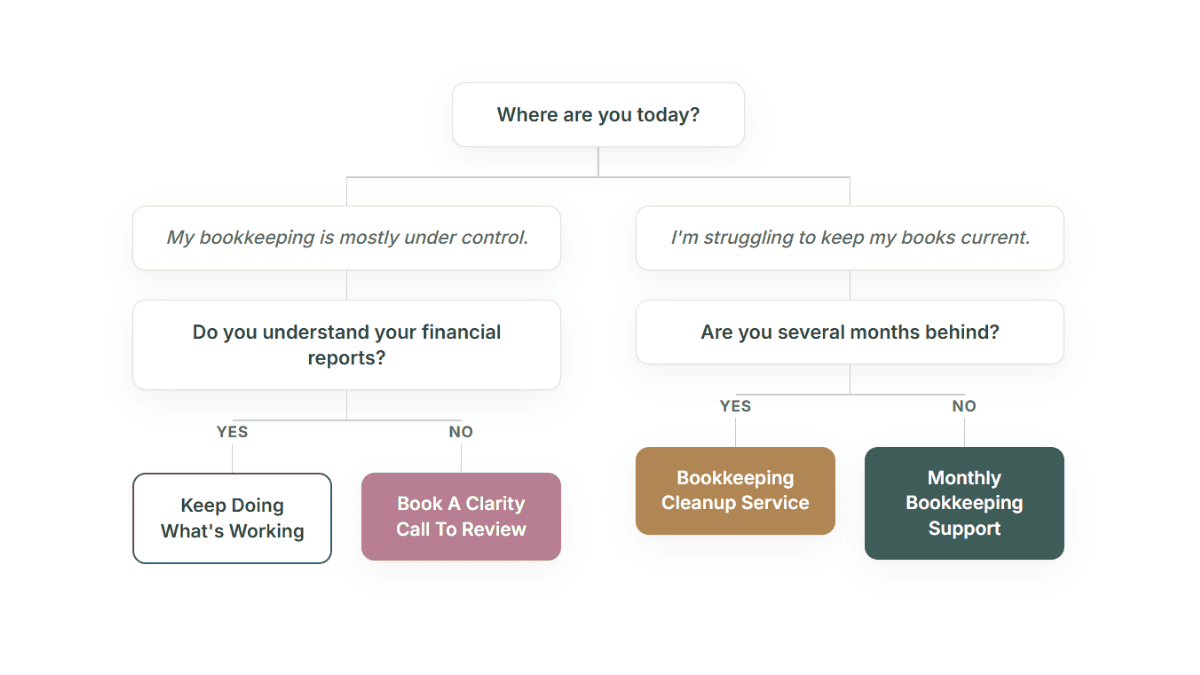
Which Type of Bookkeeping Support Fits Your Situation?
| If This Sounds Like You… | It May Be Time To… |
|---|---|
| Bookkeeping keeps getting pushed aside | Explore monthly bookkeeping |
| You're several months behind | Start with a bookkeeping cleanup |
| You have questions about your financial reports | Book a Clarity Call |
| Your business has become more complex | Consider ongoing bookkeeping support |
| Not sure which applies to you? | Book a free Clarity Call → |
What Changes After You Hire a Bookkeeper?
Many business owners think hiring a bookkeeper simply means someone else manages their transactions.
In reality, the biggest change is often the confidence that comes from knowing your financial information is organized, current, and available when you need it.
Instead of wondering whether your books are up to date, you have a clearer picture of where your business stands.
Instead of setting aside weekends to catch up on bookkeeping, you can spend that time serving clients, planning for the future, or simply stepping away from work.
Instead of trying to piece together financial information before tax season, your books are maintained throughout the year.
Working with a bookkeeper also gives you someone you can turn to with questions. Whether you’re trying to understand a financial report, wondering how a transaction should be recorded, or preparing for the next stage of your business, you’re no longer figuring everything out on your own.
For many business owners, that’s the biggest shift.
It’s not just having organized books.
It’s having greater clarity and confidence in the financial side of your business.
Good bookkeeping doesn’t replace your understanding of your business.
It supports it by giving you accurate financial information that helps you make informed decisions with confidence.
Good To Know
Hiring a bookkeeper doesn't mean giving up control of your finances. It means having organized financial information so you can stay informed without managing every detail yourself.
Who Benefits Most From Bookkeeping Services?
Bookkeeping isn’t just for large businesses or companies with a full accounting department.
Many small businesses benefit from bookkeeping because they want organized financial information, consistent records, and a better understanding of how their business is performing.
The U.S. Small Business Administration also recommends maintaining accurate financial records as part of building a healthy business and making informed decisions.
In my experience, bookkeeping is often a good fit for business owners who:
- Want to spend more time serving clients and less time managing their books.
- Want accurate financial reports they can rely on throughout the year.
- Feel like bookkeeping has become another task they’re constantly trying to catch up on.
- Have a growing business with more clients, expenses, or financial activity than they did when they started.
- Value having someone they can reach out to with bookkeeping questions as their business evolves.
Every business has different needs, which is why I don’t believe in one-size-fits-all bookkeeping.
The right level of support depends on where your business is today, how your business operates, and what will help you feel confident in your financial information.
Whether you need ongoing monthly bookkeeping, help catching up on overdue books, or simply want to understand your options, the goal is the same: to create a bookkeeping process that supports your business instead of becoming another responsibility on your list.
Can a Bookkeeper Help You Save Money on Taxes?
This is one of the most common questions business owners ask, and the answer is a little more nuanced than a simple yes or no.
A bookkeeper doesn’t prepare tax returns or provide tax advice unless they’re also licensed to do so. That’s typically the role of a CPA or tax professional.
What a bookkeeper does is help keep your financial records accurate, organized, and up to date throughout the year.
When your bookkeeping is current, your tax professional has the information they need to prepare your tax return more efficiently. It also reduces the likelihood of missing transactions, duplicated expenses, or the last-minute scramble to organize months of financial records before a deadline.
The IRS also encourages businesses to keep complete and accurate financial records throughout the year, making organized bookkeeping an important part of maintaining business records.
Good bookkeeping also gives you better visibility into your business throughout the year. Instead of waiting until tax season to understand your financial position, you have accurate reports that can help you plan ahead and have more productive conversations with your CPA or tax advisor.
Bookkeeping and tax preparation work best as a partnership.
Your bookkeeper helps maintain accurate financial records.
Your tax professional uses those records to prepare your tax return and provide tax planning advice.
Together, they help create a stronger financial foundation for your business.
Common Misconceptions About Hiring A Bookkeeper
It’s easy to assume bookkeeping works the same way for every business, but that’s rarely the case. Here are a few of the most common misconceptions I hear.
- "I need to reach a certain revenue before hiring a bookkeeper."
- There isn't a specific revenue milestone that tells you it's time.
Some business owners benefit from bookkeeping early because they want a strong financial foundation from the beginning. Others don’t need support until their business becomes more complex.
The right time depends on your business, not someone else’s timeline.
- "I can wait until tax season."
- Bookkeeping isn't just about preparing for taxes.
Keeping your books current throughout the year gives you a clearer picture of your business, helps you stay organized, and makes it easier to answer financial questions as they come up instead of trying to piece everything together months later.
- "Bookkeeping is just entering transactions."
- Recording transactions is only one part of bookkeeping.
Good bookkeeping creates organized financial information you can rely on. It helps you understand where your business stands, identify trends over time, and make decisions with greater confidence.
- "Every business needs the same bookkeeping service."
- No two businesses operate exactly the same way.
The right bookkeeping support depends on your business, your goals, and the level of support you’re looking for. That’s why I believe bookkeeping should fit your business instead of asking your business to fit a standard package.
- "Hiring a bookkeeper means giving up control of my finances."
- It's actually the opposite.
Your financial information is still yours. Working with a bookkeeper gives you organized records, accurate reports, and someone you can turn to with questions, so you can stay informed while spending less time managing the day-to-day bookkeeping yourself.
Good bookkeeping isn’t about taking over your business.
It’s about giving you the financial information and support you need to understand your numbers with confidence and focus more of your time on running your business.
Frequently Asked Questions
Quick answers to the questions we hear most.
Many small businesses benefit from working with a bookkeeper, especially as their workload grows. If you're spending more time managing your books than serving your clients, or you want more confidence in your financial information, it may be the right time to explore bookkeeping support. Every business is different, so the decision depends on your needs rather than the size of your business.
Yes. Many business owners handle their own bookkeeping when they're first getting started.
The question isn't whether you can do it. The better question is whether it's still the best use of your time. As your business grows, bookkeeping often becomes one more responsibility competing with client work and other priorities.
Bookkeeping should be updated consistently throughout the year. Keeping your books current gives you more accurate financial information, helps you stay organized, and makes tax season much easier than trying to catch everything up at once.
Bookkeeping should be updated consistently throughout the year. Keeping your books current gives you more accurate financial information, helps you stay organized, and makes tax season much easier than trying to catch everything up at once.
Yes. If your bookkeeping has fallen behind, a bookkeeping cleanup can help organize and update your financial records so you have an accurate picture of your business again. Once your books are current, ongoing monthly bookkeeping can help you keep them that way.
The right solution depends on your business, your current bookkeeping process, and the type of support you're looking for.
Some businesses need ongoing monthly bookkeeping. Others need help catching up on overdue books or understanding their financial information before deciding on the next step.
A conversation about your business is often the best place to start.
Ready to Take the Next Step?
Whether you’re just starting to explore bookkeeping support or you’ve been thinking about it for a while, the first step is understanding what your business needs today.
Every business is different, and the right bookkeeping solution should reflect the way your business operates, not a one-size-fits-all approach.
If you’re ready for organized financial information, ongoing support, and greater confidence in your numbers, I’d love to learn more about your business.
We’ll talk through your current bookkeeping process, answer your questions, and determine the next step that makes the most sense for your business.

Meet Molly Roberts
Helping service-based business owners understand their numbers with confidence.
Hi, I’m Molly.
I founded Molly Keeps Books because I believe bookkeeping is about more than categorizing transactions and reconciling accounts. It’s about helping business owners understand their financial information, answer questions with confidence, and make informed decisions as their businesses grow.
Every business works differently, which is why I don’t believe in one-size-fits-all bookkeeping. I take the time to understand how your business operates so your bookkeeping supports the way you work today while helping you prepare for what’s next.
Whether you need ongoing monthly bookkeeping, help catching up on your books, or guidance understanding your financial reports, my goal is to provide organized financial information, dependable support, and a bookkeeping process you can feel confident in.
Meet Molly Roberts
Helping service-based business owners understand their numbers with confidence.
Hi, I’m Molly.
I founded Molly Keeps Books because I believe bookkeeping is about more than categorizing transactions and reconciling accounts. It’s about helping business owners understand their financial information, answer questions with confidence, and make informed decisions as their businesses grow.
Every business works differently, which is why I don’t believe in one-size-fits-all bookkeeping. I take the time to understand how your business operates so your bookkeeping supports the way you work today while helping you prepare for what’s next.
Whether you need ongoing monthly bookkeeping, help catching up on your books, or guidance understanding your financial reports, my goal is to provide organized financial information, dependable support, and a bookkeeping process you can feel confident in.
Know Another Business Owner Who Might Find This Helpful?
If this resource answered a question you’ve been asking, there’s a good chance it could help someone else too.
Share it with another business owner who may be wondering when it’s the right time to hire a bookkeeper.